

12/24V off-grid power
SZ Series: Flexible 12/24V Power for Real-World Off-Grid Loads
Automatic 12V/24V input switching, practical thermal management and a focused hardware design for RV, mobile, backup and off-grid power systems.
View SZ Series Models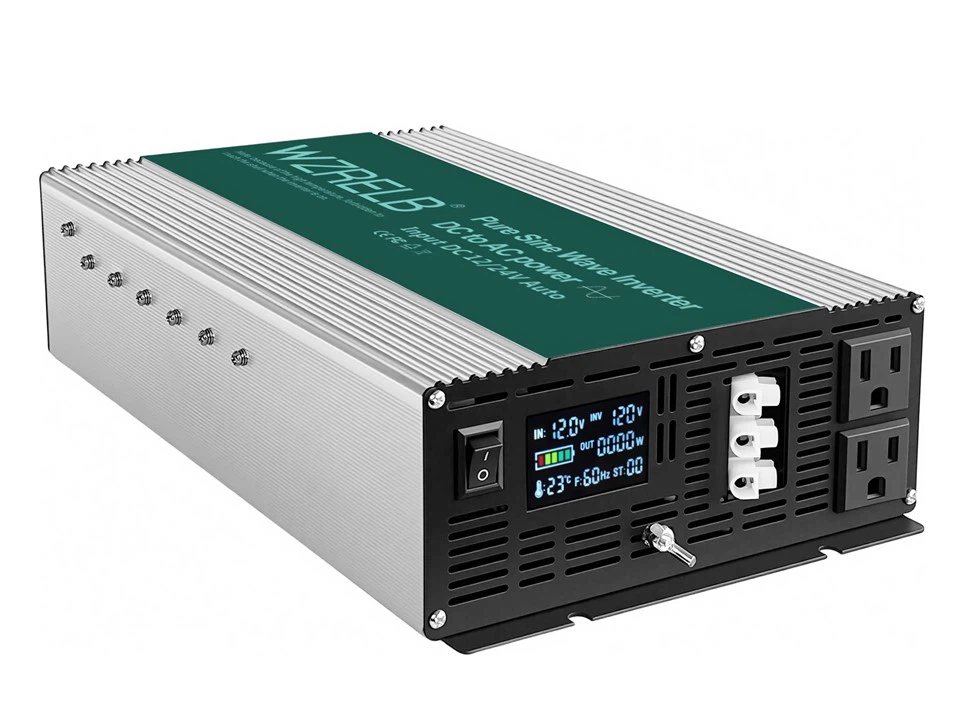
Off-grid systems rarely use one steady load. Compressors, motors and heating appliances can demand a short burst when they start, while the battery voltage and cable layout determine how much power actually reaches the inverter. The SZ Series combines automatic 12V/24V DC input switching with a practical enclosure, front display and service-oriented protection layout.
One inverter platform for 12V and 24V systems
The SZ Series is designed to identify the connected battery-system voltage and configure the inverter for 12V or 24V operation. That can simplify selection for RVs, boats, work vehicles, off-grid cabins and backup systems that use different battery architectures.
Automatic input switching reduces voltage-matching decisions, but it does not remove the need to check the exact battery range, wiring, fuse, disconnect and grounding requirements in the current model manual.
Why the SZ fits everyday systems
Automatic input detection
Use one platform across compatible 12V and 24V battery systems, while keeping the final voltage and protection checks in the installation plan.
Practical thermal management
The metal enclosure contributes to heat dissipation. Dual 12V brushless fans direct air through the case toward the front, so cabinet airflow and clearances matter.
Service-friendly protection
The design includes replaceable input fuse sockets, temperature-sensing components near heat-generating sections, MOV surge-protection components and a front display for operating information.
Designed for changing real-world loads
Refrigerators, freezers, air conditioners, pumps and tools may draw much more power at startup than they use after they are running. Select the inverter, battery, cables, fuses and ventilation as one complete system instead of sizing from running watts alone.
Independent field test reference

In a third-party test of a 3000W 12/24V sample, approximately 850W was already connected before two freezers, two commercial vacuum cleaners and a toaster oven were switched on. The setup completed the combined startup. A later portion of the test reported operation with a 12,000 BTU air conditioner and more than 1,000W of household loads.
These observations provide a useful reference for mixed-load planning, while the exact result depends on the battery voltage, cable size, connections, ventilation, ambient temperature and the timing of each startup.
Clear information for everyday use
The front display makes it easier to check operating status during setup and use. A field test found it useful, while noting that the AC output reading was an estimate rather than a precision measurement.

Choose the right installation focus
Off-grid cabins
Match the battery bank, household loads and ventilation plan for dependable daily power away from the grid.
RVs and mobile systems
Use the 12V/24V platform where different vehicles or battery configurations need a flexible selection path.
Backup power
Review essential loads, battery runtime and transfer or wiring requirements before relying on the inverter during an outage.
Mixed-load appliances
Account for compressor, pump and tool startup demand, not only the running wattage shown on the appliance label.
Plan the installation in three steps
Match the battery voltage
Confirm the exact model's approved DC range and automatic 12V/24V switching conditions before connecting the battery bank.
Size the complete load
Check continuous power and startup demand for every appliance that may operate at the same time, including battery and BMS limits.
Plan cables and airflow
Follow the manual for cable, fuse, disconnect, grounding and AC-output requirements, then keep the front exhaust path clear.
Compare the current SZ Series models
Review the available 12V/24V configurations and confirm the exact AC output, accessories and specifications before ordering.
Frequently asked questions
How does the SZ Series detect 12V or 24V?
The automatic detection applies to the DC battery input. The inverter configures itself for a compatible 12V or 24V battery system during startup. Confirm the approved voltage range and switching conditions for the exact model.
Does automatic DC detection also change the AC output?
No. Battery-side input detection and AC output are separate specifications. Confirm the required AC voltage, frequency, socket and hardwire configuration before ordering.
Can the SZ Series run compressors or other startup loads?
It can be considered for systems with motor or compressor loads when the continuous rating, startup demand, battery current, cables, fuses and ventilation are sized together. A successful test with one appliance combination does not guarantee every load.
What should I check before installation?
Verify the exact DC range, continuous and surge ratings, cable and fuse requirements, disconnect and grounding method, front airflow clearance, AC output configuration and local electrical requirements.
Are the field-test efficiency and temperature figures official ratings?
No. The 89%–91% efficiency estimate, approximately 6–7W idle draw and 50–60°C operating temperature came from one sample and one test setup using 0 AWG cables. Use the current official specification for design and validation.
Does every SZ model include USB, Bluetooth or app control?
Feature sets can vary by SKU and revision. The tested configuration did not include those functions. Confirm the current product listing or manual if remote monitoring or USB output is required.