

WZRELB Split Phase Pure Sine Wave Inverter
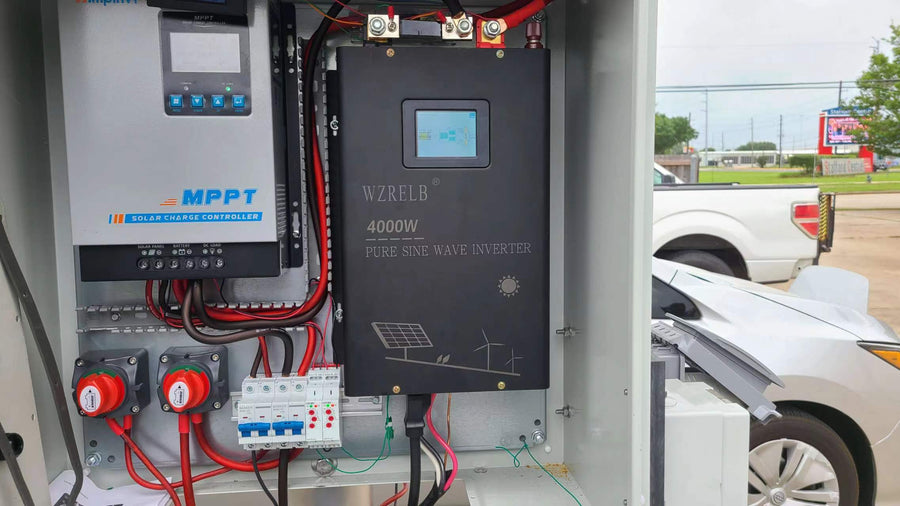
4000 Watt WZRELB Split Phase Pure Sine Wave Inverter with Wired Remote

-
Split Phase Pure Sine Wave Inverter: Built for North American split phase applications, this inverter delivers 4000W continuous power. It supports common DC input versions including 24v / 36v / 48v / 60v / 72v / 96v / 110v and is suitable for RV systems, cabins, workshops, off-grid battery systems, and backup installations that need clean and reliable AC power.
-
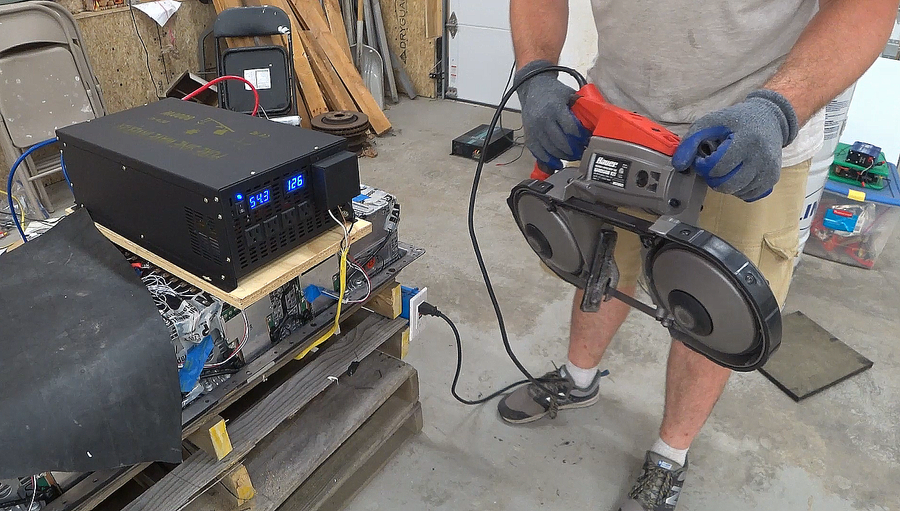
Built-in LCD Monitoring: Equipped with a front LCD display that helps users check battery status, running condition, and output information more clearly during daily use, installation, and troubleshooting.
-
Soft Starter Technology: Designed with built-in soft start support to help reduce sudden startup impact on connected appliances and improve overall operating stability in demanding off-grid systems.
-
Wired Remote LCD Monitor: The wired remote version supports cable-connected on/off control and external LCD monitoring, which is more practical for wall-mounted, cabinet, and fixed-installation systems. The wired remote version is more suitable when users want easier front-panel access from a mounted or enclosed installation position. A 16ft remote cable is included.
-
Heavy-Duty Split Phase Design: Measuring approximately 15 x 9.9 x 5.3 in and weighing about 15.80 lb, this split phase inverter uses an aluminum housing for heat dissipation and durability in off-grid, mobile, and backup installations.
-
Note: Each 120V line shares the total inverter capacity. This 4000W model supports up to 2000W per 120V leg and up to 4000W total output at 240V, about 16.7A total output at 240V.
Split Phase Output & LCD Monitoring
-
True Split Phase Output Layout: This inverter supports L1 + N = 120V, L2 + N = 120V, and L1 + L2 = 240V. It is designed for North American split phase systems that need both 120V branch loads and 240V loads from one inverter.
-
Per-Leg Load Planning: Based on the split phase data sheet, each 120V leg should be planned within about half of the model rating. This 4000W model supports about 2000W per 120V leg, while the total combined load across all outputs must stay within 4000W.
-
LCD Information Display: The front LCD helps users check battery voltage and battery level, inverter running status, internal temperature, AC1 / AC2 output information, and output frequency, which makes daily monitoring and troubleshooting easier.
Attentions for resistive load applications:
If you need the inverter to run resistive loads such as laptops, TVs, routers, lights, electric cookers, chargers, and other stable electronics, please choose an inverter with continuous power higher than the appliance's rated power. It is better to use about 80% of the rated power for daily operation and longer product life.
Attentions for inductive load applications:
If you use refrigerators, freezers, microwaves, water pumps, air conditioners, compressors, and other motor-driven appliances, please choose the inverter whose continuous power is 3-7 times higher than your appliance's working power. Some compressor loads may require even higher startup margin.
Installation Tips
-
Battery Connection Sequence: Connect the negative battery cable first. Then touch the positive cable to the spark-proof positive terminal for 3 to 5 seconds before fastening the positive cable fully. This follows the split phase manual procedure and helps reduce connection sparking.
-
Keep DC Cables Short and Heavy Enough: Large split phase inverters draw high DC current. Install the inverter close to the battery bank, use appropriately sized copper cables, and make sure all lugs are tightened firmly to reduce voltage drop and heat.
-
Leave Space for Cooling: Install in a clean, dry, ventilated location and keep clearance around the fans and heat sink. Do not block the air path, because the inverter uses automatic fan cooling and over-temperature protection.
-
Understand the AC Terminal Layout: The hardwire terminal is arranged as L1 for live, N for neutral, L2 for live, and G for ground. Confirm the branch wiring carefully before powering on, especially when connecting to a sub-panel or transfer setup.
-
Remote Version Planning: The wired remote version is better for wall-mounted or enclosed installations where the inverter face is not easy to reach. The wireless version is more convenient for daily on/off control, but signal performance should be tested before final mounting if the inverter is installed behind doors or metal partitions.
Important Cautions
-
Total Output Still Has One Combined Limit: Even if you use both 120V outputs and the 240V output, the total connected load must remain within the inverter's 4000W rating, or about 16.7A maximum total current at 240V equivalent.
-
Single-Leg Use Can Show Small Voltage Drop: According to the product data sheet, when only one 120V leg is used under heavier load, the output may drop slightly, typically within about 0V to 8V depending on load condition.
-
Neutral and Ground Should Not Be Jumpered Inside the Inverter: If your system uses a house neutral-to-ground bond, follow code-compliant system wiring and do not directly tie the inverter's N and G terminals together at the inverter output.
-
Check Battery Capacity Before Blaming the Inverter: Low battery capacity, insufficient state of charge, long DC cable distance, undersized cable, or too much startup surge are common reasons for low-voltage alarm, shutdown, or overload protection.
Warranty: 12 Months for Non-artificial damage.
| Inverter Size (inch) | 15 x 9.9 x 5.3 in |
|---|---|
| Net Weight (pound) | 15.80 lb |
| Wattage | 4000w |
| DC Input Voltage | 24v / 36v / 48v / 60v / 72v / 96v / 110v |
| DC Input Voltage Range | 21-30V/30-45V/42-60V/50-75V/60-90V/75-115V/90-135V |
| AC Output Voltage | 110V/220V or 120V/240V |
| 120V Output per Leg | Up to 2000W per 120V leg |
| 240V Total Output | Up to 4000W total / about 16.7A |
| No Load Current Draw | 40W |
| Efficiency | >90% |
| AC Regulation | <3% |
| Frequency | 50Hz or 60Hz |
| Low Voltage Protection | 19.5-21.5v / 29.5v-31.5v / 43-45v / 50.5-51.5v / 60.5-61.5v / 76-77v / 91-93v |
| Over Load | Shut Off Output |
| Over Voltage Protection | 30.5v / 45.5v /61.5v /75v / 90v / 115 / 135v |
| Over Heat Protection | Shut Off Output Automatically |
| Cooling Fans | 2 |
| Working Temperature | -10°C TO 50°C / -50°F TO 122°F |
| Storage Temperature | -30°C TO 70°C / -86°F TO 158°F |
| Working Humidity | 20% TO 90% RH Non-condensing |
| Start | Soft Start |
| Total Harmonic Distortion | THD<5% |
| Display | Built-in LCD Display |
| Remote Function | Wired Remote LCD Monitor and On/Off Switch |
| Remote Distance / Cable | 16ft remote cable included |
| Remote Battery | Not required |
| Packing Size (inch) | 18.1 x 12.6 x 8.2 in |
| Gross Weight (pound) | 19.36 lb |
Choose your Spec from the size options. Please confirm your battery voltage, AC voltage and frequency.
There is no auto-sense of the input and output voltage. Choose one input and one output voltage when ordering.
Note:
Our factory supports customized sockets for multiple countries, please leave your message about the scoket type you need.

Before You Power It On
-
Make sure the inverter switch is in the OFF position before wiring the battery and AC side.
-
Use a fully charged battery or battery bank that matches the ordered DC input version.
-
Turn on the inverter first, then turn on the connected appliances one by one. When shutting down, turn off the appliances first, then turn off the inverter.
-
For panel or fixed-building wiring, installation by a qualified electrician is recommended.
- What is the main difference between the wired remote and wireless remote versions?
The wired remote version adds a cable-connected remote monitor and on/off switch, which helps users operate the inverter more conveniently when the main unit is installed away from the working position. A 16ft remote cable is included.
- What battery or remote distance details should I know before ordering?
The wired remote version is more suitable when users want easier front-panel access from a mounted or enclosed installation position. A 16ft remote cable is included.
- Can this 4000W split phase inverter provide both 120V and 240V output?
Yes. It supports 120V / 240V AC split phase output. Users can run 120V loads and 240V loads when the wiring method and the total connected load remain within the rated inverter capacity.
- How much power can each 120V line provide?
Each 120V line supports up to half of the total model rating. This 4000W model supports up to 2000W per 120V leg, while total output remains within 4000W rated power.
- Can I use 120V loads and 240V loads at the same time?
Yes, but the combined output still shares one inverter power budget. For example, if part of the inverter capacity is already used by a 240V load, the remaining capacity available for the 120V legs is reduced accordingly.
- What should I confirm before ordering?
Please confirm the DC input version, output socket type, required frequency, and whether you need the wired remote or wireless remote version. Suitable for workshop loads, small backup circuits, and heavier mixed-load systems.
- Why does the inverter alarm or shut down when a large appliance starts?
That is usually caused by startup surge, low battery voltage, insufficient battery capacity, long DC cable distance, or cable that is too small. Inductive appliances such as pumps, compressors, and air conditioners often need much higher startup power than their running wattage.
- What should I check first if the inverter stops working abnormally?
Check the battery voltage, whether the battery is fully charged, the distance from battery to inverter, cable thickness, the actual load connected, and whether the inverter can restart with no load connected. These are the first checks recommended in the after-sales notes.
- Do I need to send any information for troubleshooting?
Yes. Helpful troubleshooting information includes your battery voltage and capacity, battery-to-inverter cable length, appliance type and wattage, alarm or fault behavior shown on the LCD, and clear internal PCB photos if there is visible burning or damage.
- Why is load planning important for split phase inverters?
The inverter can support both 120V and 240V outputs, but the total connected load must remain within the rated capacity of the model you choose. Buyers should also match cable size, battery capacity, and real load demand with the selected inverter model.
Customer Installation