

WZRELB Pure Sine Wave Inverter
500 Watt WZRELB Pure Sine Wave Inverter
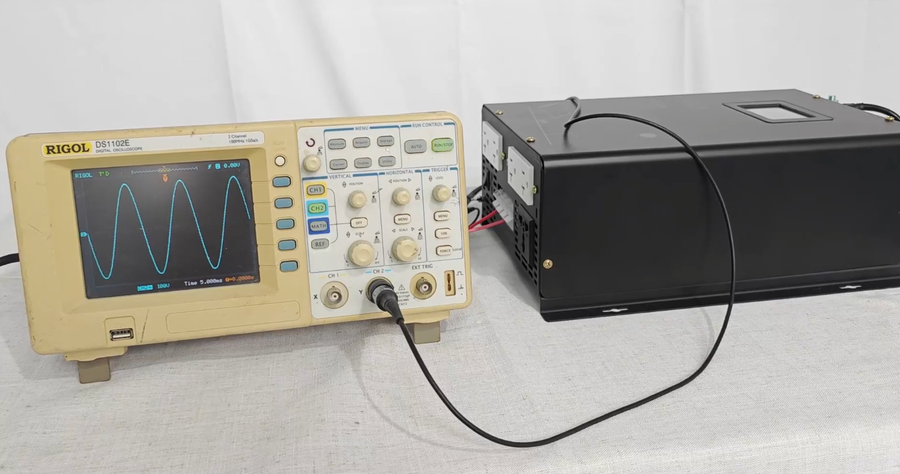
- 500W Pure Sine Wave Power: The SE500 delivers 500W continuous output and 1000W surge output in an aluminum shell. Choose one DC input version: 12V, 24V, 36V, 48V, 60V, 72V, 96V, 110V. AC output options: 110V, 120V, 220V, 230V, 240V. Frequency: 50Hz or 60Hz. Each unit is built for the selected input voltage, output voltage and frequency; these settings do not auto-switch.
-
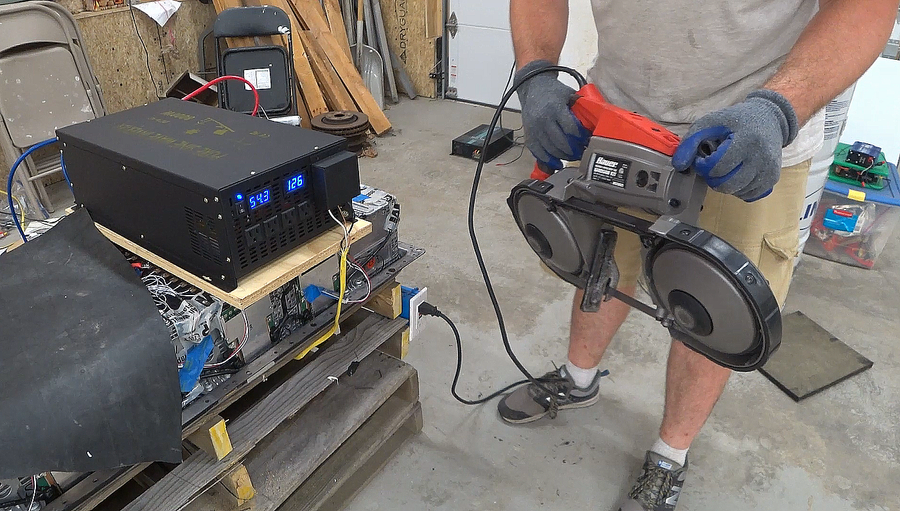
Intuitive LED Display: Equipped with a clear digital LED display, this inverter allows you to monitor the input voltage in real time, helping you understand operating status more easily during travel, backup use, and off-grid applications.
-
Soft Starter Technology: Designed with a built-in soft starter, this inverter supports a smoother rise of AC voltage at startup. This helps reduce inrush impact on connected appliances and improves operating stability.
-
Compact and Durable Design: Measuring approximately 9.6 x 3.6 x 2.5 inches and weighing about 1.98 lbs, this inverter is designed for mobile and off-grid use. The all-aluminum shell helps improve heat dissipation and durability during operation.
-
Practical Daily Use: This standard version is suitable for users who want a straightforward inverter setup for vehicle charging, travel, camping, and small backup applications without extra remote-control accessories.
-
Note: Due to the high operating temperatures under heavy load, avoid touching the inverter housing while in use.
Attentions for resistive load applications:
If you need the inverter to run resistive loads such as laptops, TVs, lights, routers, and chargers, please choose an inverter with continuous power higher than the appliance's rated power. It is better to use about 80% of the rated power for daily operation and longer product life.
Attentions for inductive load applications:
If you use small pumps, compact refrigeration, or other appliances with motors, please choose the inverter whose continuous power is 3-7 times higher than your appliance's working power. Some motor loads may require even higher startup margin.
Warranty: 12 Months for Non-artificial damage.
| Inverter Size (inch) | 9.6 x 3.6 x 2.5 |
|---|---|
| Net Weight (pound) | 1.98 |
| Continuous Output Power | 500W |
| Model | SE500 |
| Surge Output Power | 1000W |
| DC Input Voltage | 12V / 24V / 36V / 48V / 60V / 72V / 96V / 110V |
| DC Input Voltage Range | 10-15V / 21-30V / 30-45V / 42-60V / 50-75V / 60-90V / 75-115V / 90-135V |
| AC Output Voltage | 110V / 120V / 220V / 230V / 240V |
| Frequency | 50Hz or 60Hz |
| No Load Current Draw | <10W |
| Efficiency | 85% -- 90% |
| AC Regulation | 3% |
| Low Voltage Alarm | 9.5-10.5V / 19.5-21.5V / 29.5-31.5V / 43-45V / 50.5-51.5V / 60.5-61.5V / 76-77V / 91-93V |
| Low Voltage Shut Down | 9-10V / 18.5-20.5V / 29-30V / 41.5-42.5V / 50-51V / 60-61V / 74-76V / 90V |
| Over Load | Shut Off & Recover Manually |
| Over Voltage Shut Down | 15.5V / 30.5V / 45.5V / 61.5V / 75V / 90V / 115V / 135V |
| Over Voltage Protection | Shut Off Output Automatically |
| Over Heat Protection | Cooling Fans Run When It's Over 120 F |
| Cooling Fans | 1 |
| Working Temperature | -10°C TO 50°C / 14°F TO 122°F |
| Storage Temperature | -30°C TO 70°C / -22°F TO 158°F |
| Working Humidity | 20% TO 90% RH Non-condensing |
| Start | Soft Start |
| Total Harmonic Distortion | THD<5% |
Choose your configuration: Select the DC input version that matches your battery system (12V / 24V / 36V / 48V / 60V / 72V / 96V / 110V), your AC output voltage (110V / 120V / 220V / 230V / 240V), and 50Hz or 60Hz. Confirm the required socket type when ordering.
Note: This inverter does not auto-sense input voltage. Please choose the correct battery system version before ordering.
Output specification: choose 110V / 120V / 220V / 230V / 240V AC and 50Hz or 60Hz. Socket type is configured for the selected output and destination; confirm the required socket when ordering.
The output is single phase. The 220V / 230V / 240V versions do not provide 120/240V split-phase power.
Battery-to-Inverter Connection Video
SE Series · 300W–1200W
- Can I add a fuse or circuit breaker between the input terminal of the inverter and the battery? If so, what specifications are recommended?
Use the DC-rated fuse or circuit breaker specified for the SE500 version you select. Confirm the selected input voltage, cable rating and battery fault current against the supplied model manual.
Watts divided by DC volts is not a complete fuse-sizing rule. Allow for conversion losses and startup demand, and use a DC voltage rating and interrupting capacity suitable for the battery system. The fuse must also protect the installed cable.
- Why did sparks appear on the cable and the inverter terminal when connecting the battery to the inverter?
This is normal, and it does not mean the inverter is malfunctioning. The inverter has built-in capacitors, so when the battery cable is connected to the inverter input, a small spark may appear as part of the charging process.
- Why does the inverter's output voltage keep dropping or even shut down automatically when running loads?
First, check whether the fuse or breaker size is correct. Second, make sure the battery cables are thick enough and all supplied cables are used correctly. Third, check whether the battery capacity is too small for the load. Thin cables, long cable runs, or weak battery systems can all cause voltage drop.
- Why can't the inverter be turned on?
Please fully charge the battery before installing the inverter. When battery power is too low, the inverter may enter low-voltage protection or fail to start.
- Why can't my inverter run the refrigerator?
Refrigerators use compressors, which are inductive loads and can require a startup surge many times higher than their running power. In many cases, you need an inverter with much higher surge margin than the refrigerator's working wattage.
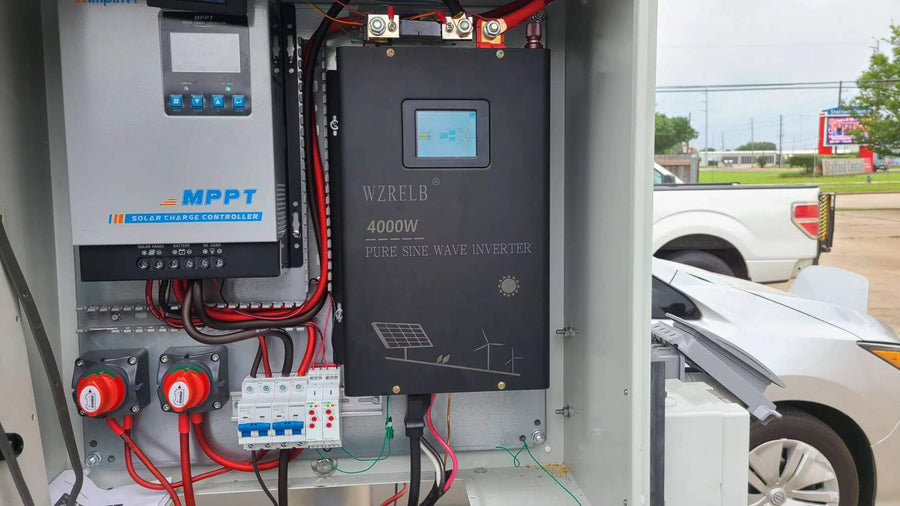
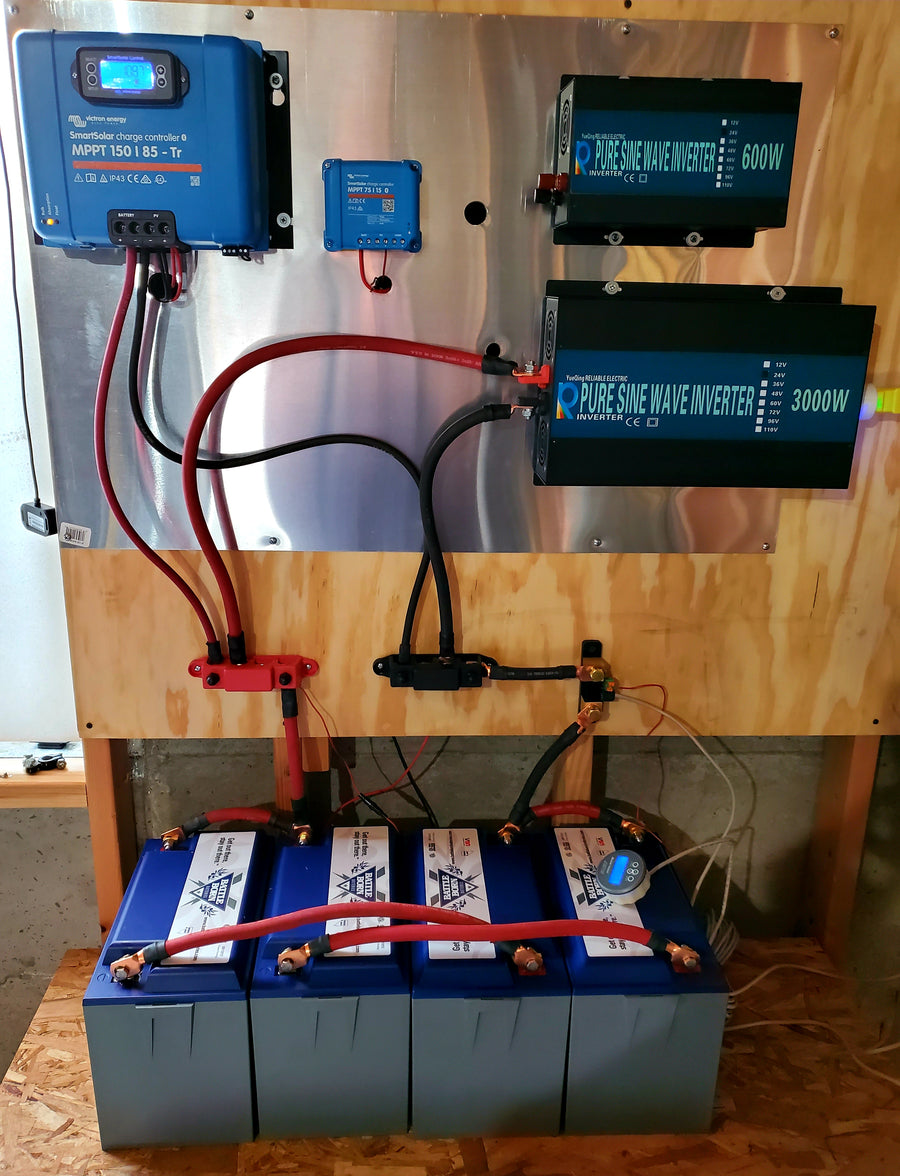
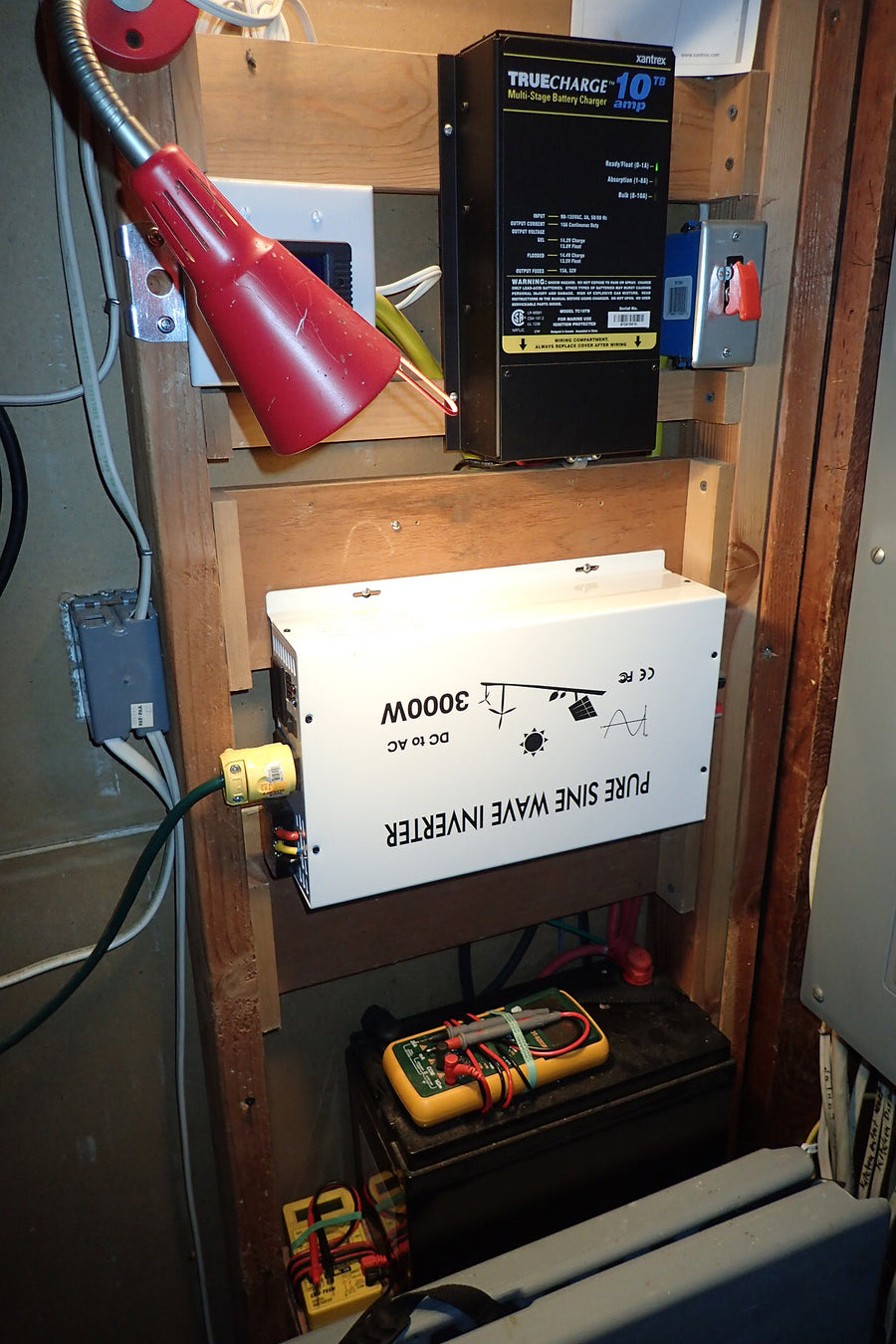
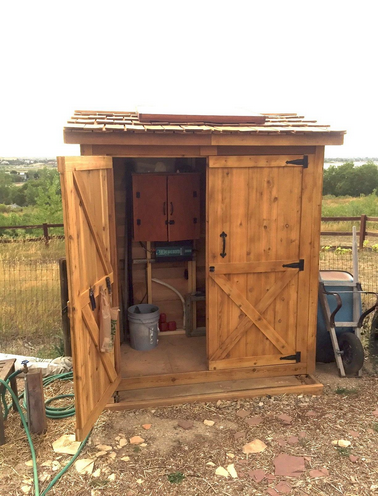
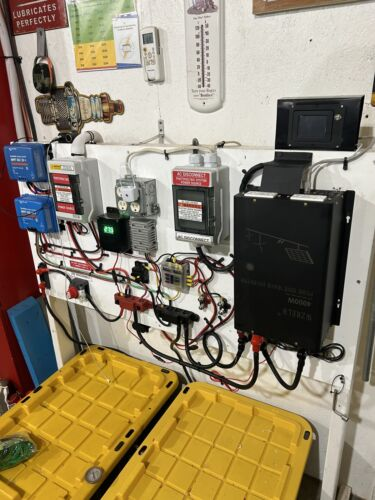
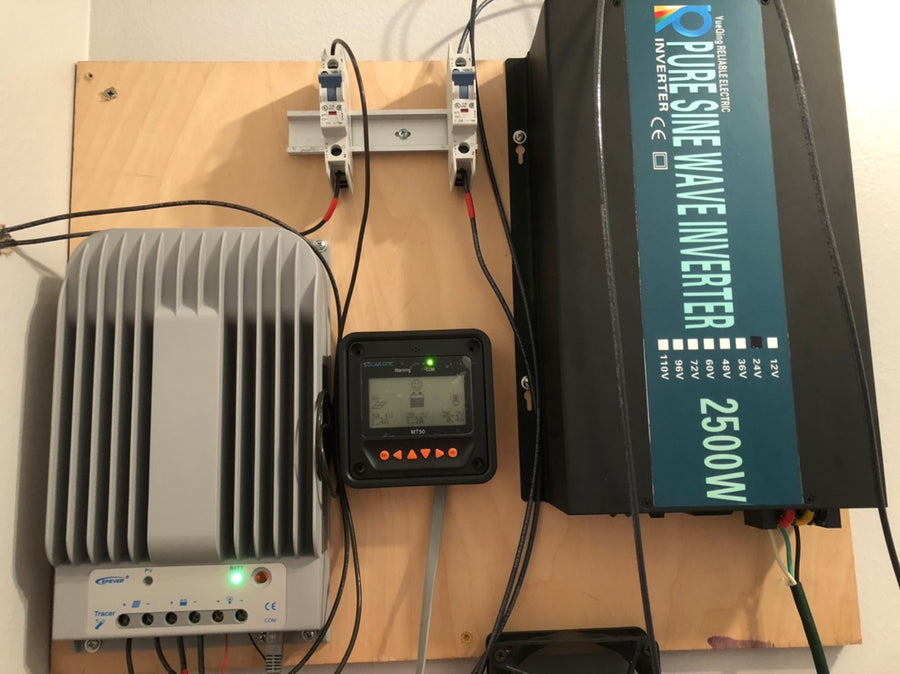
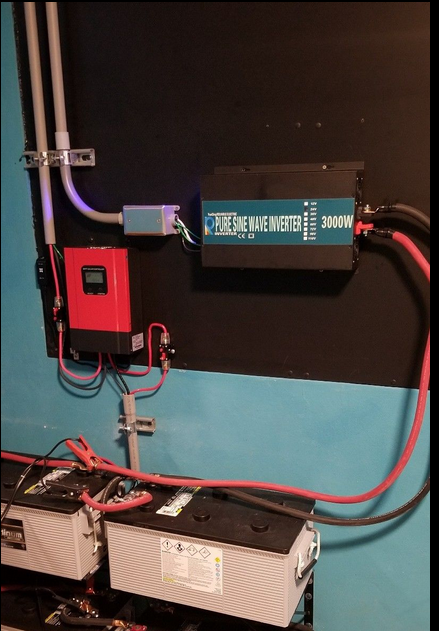
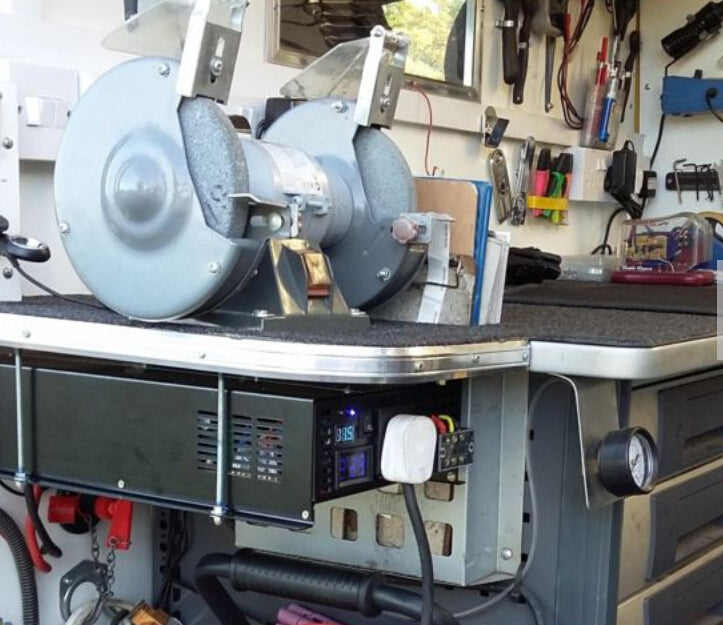
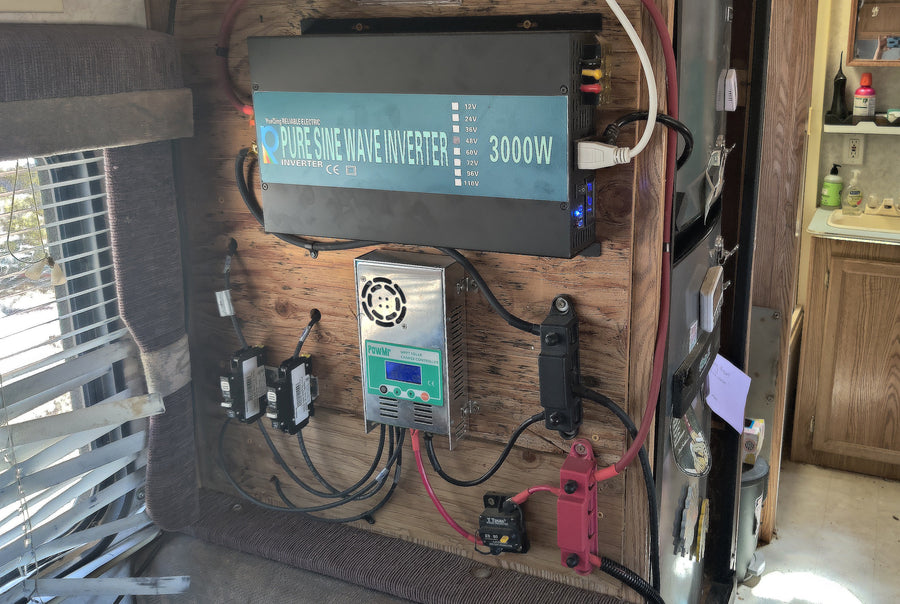
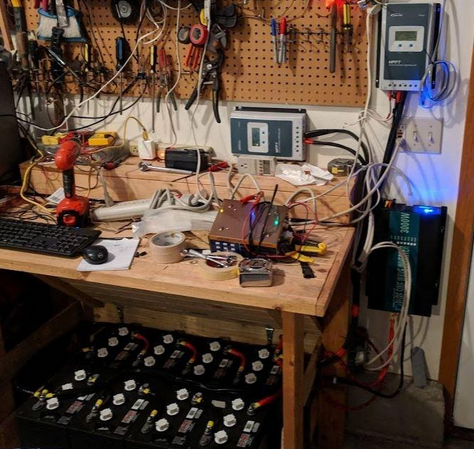
Customer Installation